The Met: early 5th-century jewelry set
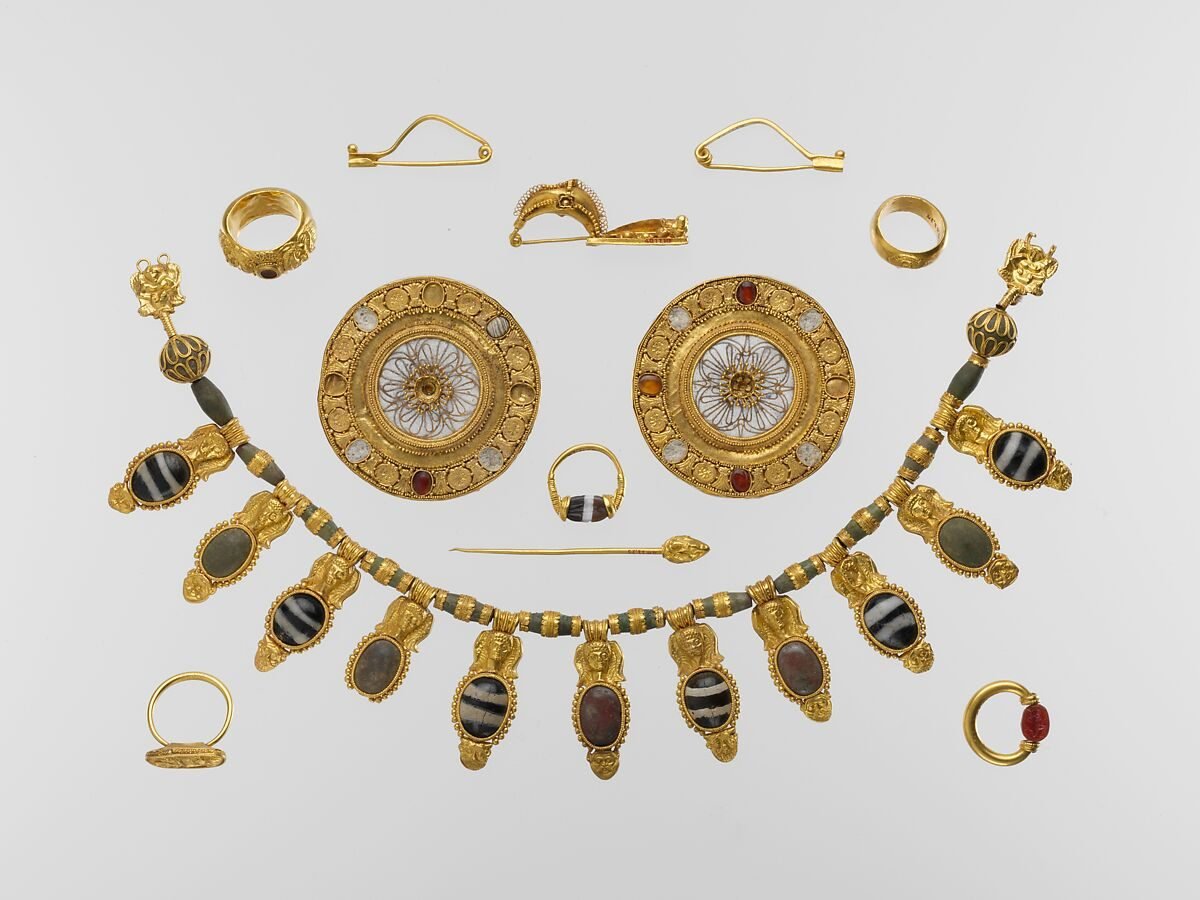
This tomb group brings multiple forms together: necklace, disk ornaments, fibulae, pin, and rings. The museum record identifies gold, glass, rock crystal, agate, and carnelian, making the set particularly useful for studying material contrast and ensemble design.
The Met: sanguisuga-type fibula
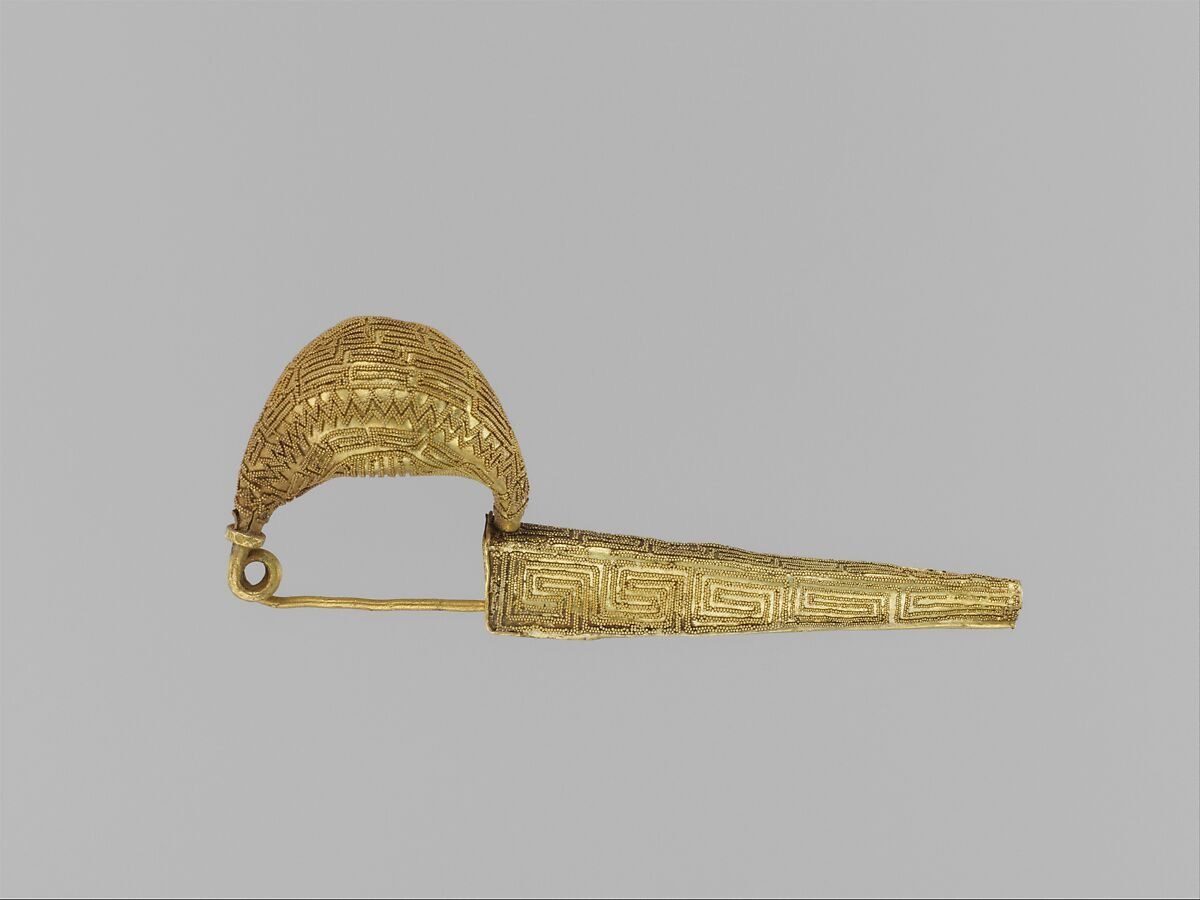
Dated to the 7th century BCE, this gold fibula uses granulated zigzags and meanders. It is a clear example of geometric pattern integrated into a functional fastening form.
The Met: granulated and filigreed pin
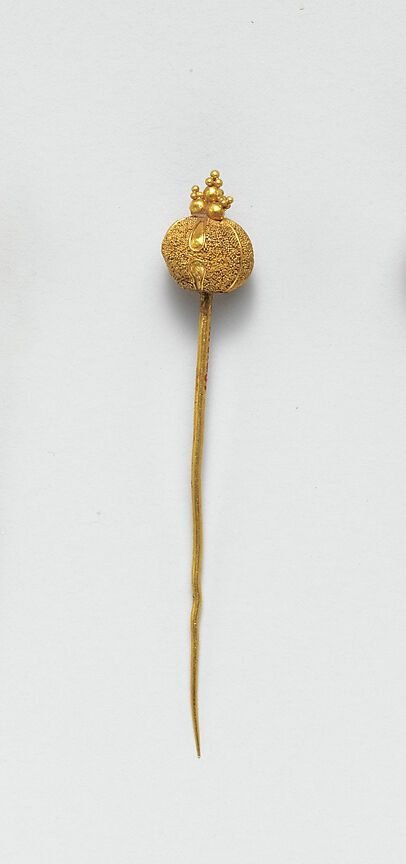
The round head combines granulation and filigree and is topped by a pyramid of small gold balls. The piece shows how a compact object can carry dense, layered surface work.
British Museum: necklace with scarabs
The British Museum catalogue describes a gold necklace with decorated beads, filigree, granulation, and attached carnelian scarabs. It is useful for studying modular necklace construction and the movement of scarab forms across Mediterranean cultures.
Research cautions
Museum attributions and dates may be refined. Older restorations can alter an object's appearance, and collection histories may contain gaps. Treat each catalogue as a current research record, not an unchangeable verdict.